
Landlords and Tenants

Are you a local tenant or an out-of-town landlord? Find vital flood advice to protect your property before the rain starts: Tenants: Learn how to check your live risk and stay safe. Landlords: Learn how to safeguard your property from afar.

Canal side houses in Yorkshire
The cost of not being ready

When floods hit, a lack of prep costs everyone time and money.

Past floods have forced local landlords to pay for expensive repairs out of pocket. They have also had to cancel rent payments and pay for temporary housing for tenants while work is done. This can take months if local builders are busy, and tenants can take landlords to court if these duties are not met.

Many tenants have lost valuable belongings, business stock, and equipment. Being caught off guard causes massive, avoidable stress.

Hand with keys in front of a door
How can landlords and tenants prepare for flooding?
  • Check flood risk, Find out if your property is in a high-risk area. Keep in mind that heavy rain can cause sudden flash floods anywhere, even if you live far away from a river.
  • Sign up for free flood warnings, get warnings sent straight to your phone when river levels rise. These free alerts give landlords peace of mind and give tenants vital time to protect their homes and belongings.
  • Make a clear flood plan. Talk to each other before the rain starts. Landlords should know how to protect their building, and tenants should know how to safely turn off the gas, electricity, and water.

Advice for landlords:
  • Inform tenants of their flood risk. Encourage them to make a simple flood plan so they know exactly what to do.
  • Ask a surveyor to check the building. They can help you find the best ways to block water and protect your investment.
  • Keep flood damage low by moving electrical outlets, fuse boxes, and plumbing high up the walls. Use water-resistant building materials to cut down on future repair times and costs.
  • Install flood defences. Put in flood gates, smart air bricks, and one-way valves to keep water out. Make sure you show your tenants how to put these defences in place during an emergency.
  • Check and maintain your flood equipment in accordance with the manufacturer’s instructions.

Advice for tenants:
  • Keep an up-to-date flood plan. Use this free government template.
  • Keep a bag of essential items in a safe, dry place. Make sure it includes: A list of emergency phone numbers.Fresh bottled water.Your prescription medicine. Create a flood pack here.

Find out more about practical steps to protect your property, including flood resistance and resilience measures.

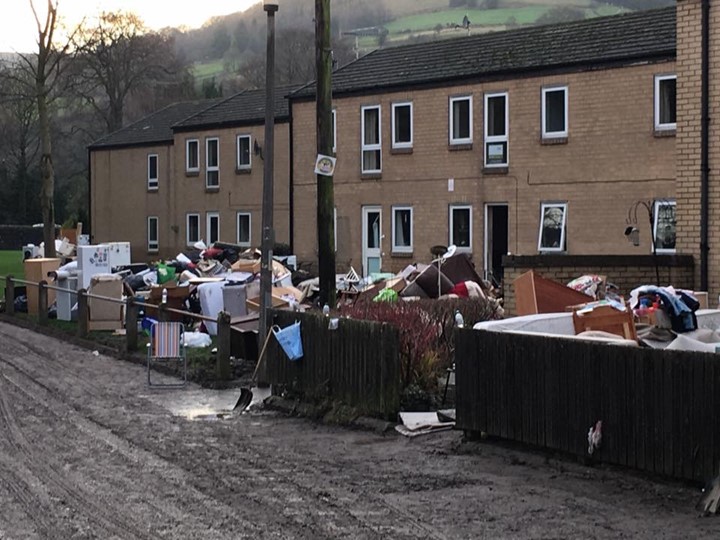
Flooded street in Mytholmroyd
Photo credit: Trudy Bradburne
In the event of flooding

Landlords:

  • Unless this is caused by the tenant, landlords are legally responsible for repairs to the structure of the building and must get water, gas, electricity, sanitation and heating back up and running as soon as possible.
  • Although landlords are not required to find accommodation for displaced tenants, they may have to assist with any costs that arise if the property is so badly damaged that the tenant needs to relocate whilst repairs are made.

Tenants:

  • When flooding occurs, tenants are advised to tell the landlord as soon as possible and document the flooding where safe to do so in order in case they need to put in an insurance claim later on. This may include taking photos and saving receipts from hotels they have to stay in if the property is too badly damaged to inhabit.
  • Tenants are responsible for their personal possessions and should take simple measures to limit damage to the property in the event of flooding where this is possible and does not pose a danger to life. Such measures might include lining the doors of the affected room with towels or rags and using buckets to collect water.
  • Advice for tenants who need to move out temporarily can be found on the Citizens Advice website.


Back to the Top
arrow arrow
Website Feedback Your Opinion Matters Thank you for submitting your feedback
arrow

Have you found what you were looking for on our site today?

Yes, thank you
No, unfortunately not
I’m not sure, I’m still looking

Would you be willing to share a bit more detail about your site experience today? It will only take a few minutes of your time.

Yes please
No thank you

This will help us to make future improvements to our website to help you find the information that you need quickly and efficiently.

Skip to content